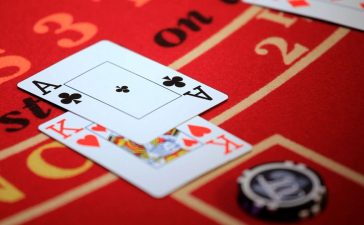
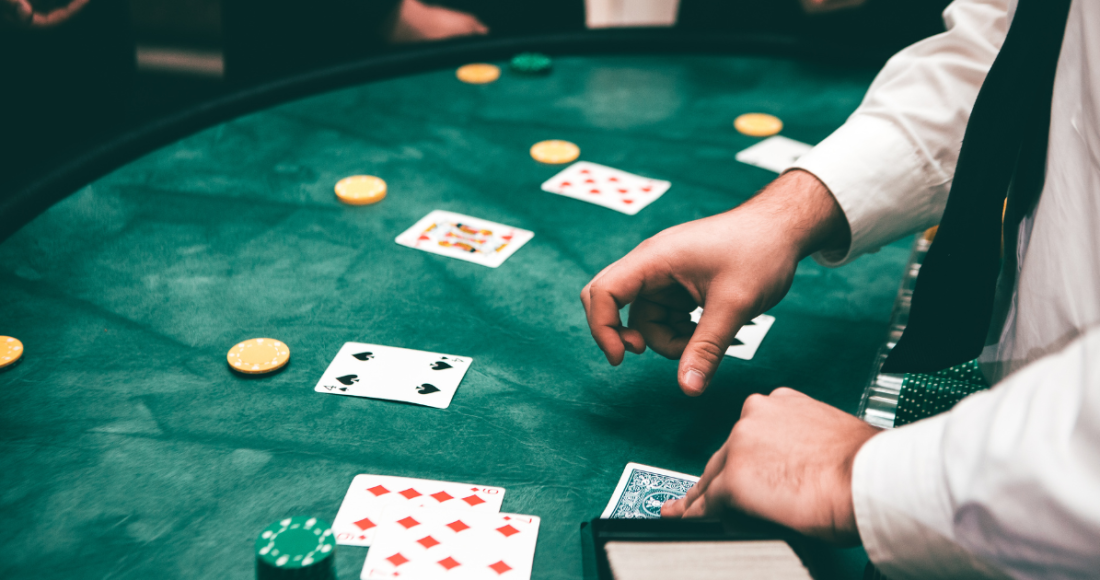
The modern casino floor is a sensory marvel designed to capture attention and capitalize on chance. Rows of flashing slot machines emit synthesized melodies, while roulette wheels spin in a rhythmic cycle of pure probability. Amid this landscape of flashing lights and independent trials, the blackjack table stands as a distinct haven for the analytical player.
While most casino games reduce the participant to a passive observer hoping for a favorable outcome, blackjack demands active intellectual engagement. It is a game where your decisions directly alter the course of the math. Decades after its introduction to the mainstream gaming world, blackjack retains its crown as the premier strategy game on the casino floor because it uniquely balances approachable rules, mathematical transparency, genuine player agency, and a beatable structure.
The Mathematical Supremacy of the House Edge
To understand why blackjack reigns supreme among strategists, one must first look at the concept of the house edge. The house edge represents the mathematical advantage that the casino holds over the player in the long run, expressed as a percentage of the total money wagered.
The Problem with Pure Chance Games
In games like slot machines, the house edge is fixed and often quite steep, sometimes ranging from five percent to fifteen percent. No amount of timing, button-pressing cadence, or pattern tracking can alter this metric. Roulette offers a lower house edge, sitting at two point seventy percent for single-zero European wheels and five point twenty-six percent for standard American double-zero wheels. However, just like slots, that percentage remains completely unyielding regardless of whether you are a novice or a statistical genius.
The Blackjack Advantage
Blackjack tears down this rigid barrier. If a player approaches the table with no strategy, playing purely on gut feeling or intuition, the house edge can easily balloon to over two or three percent. However, if that same player executes basic strategy perfectly, the house edge plummets to less than zero point five percent, depending on the specific table rules.
This is the lowest structural house edge available on the casino floor for a game that requires active decision-making. For a player who values mathematical efficiency, blackjack offers the fairest transactional relationship with the house.
The Empowerment of True Player Agency
Many casino games offer the illusion of choice. In craps, you choose which numbers to back. In baccarat, you select whether to back the banker or the player. Yet, once the dice leave the hand or the cards leave the shoe, you have zero control over how the round resolves. Blackjack provides actual, ongoing agency throughout the life of the hand.
Strategic Options Beyond Hitting and Standing
The depth of blackjack strategy lies in its multi-layered decision matrix. Players are not merely choosing whether to take another card (hit) or keep their current total (stand). They are handed advanced financial options that allow them to capitalize heavily on vulnerable dealer positions.
-
Doubling Down: This option allows you to double your initial wager in exchange for agreeing to take exactly one additional card. This is a powerful weapon when you hold a strong total like ten or eleven against a weak dealer upcard like a five or six.
-
Splitting Pairs: When dealt two cards of identical value, you can separate them into two completely independent hands, matching your original bet for the second hand. This turns defensive positions into aggressive, multi-unit offensive strategies.
-
Surrender: Available at select tables, late surrender allows you to forfeit half your wager and instantly kill the hand if your probability of winning is catastrophically low, such as holding a hard sixteen against a dealer ten.
These options transform the game from a test of luck into a test of risk management and resource allocation.
The Reality of Basic Strategy and Dependent Trials
The reason blackjack can be optimized to such a high degree is that it is a game of dependent trials. This stands in stark contrast to independent trial games like roulette or craps, where every roll or spin resets the mathematical ecosystem completely.
Understanding the Changing Deck Environment
In roulette, the fact that the ball landed on red ten times in a row has zero impact on the eleventh spin. The wheel has no memory. Blackjack, however, is played from a finite shoe of cards. When a card is dealt out of the shoe, the composition of the remaining deck changes. If all four aces are dealt in the very first round, your probability of hitting a natural twenty-one drops to absolute zero for the remainder of that shoe.
Because the past directly impacts the present, mathematicians have been able to calculate the single most optimal decision for every single card combination. This complete map of optimal play is known as basic strategy.
The Creation of Basic Strategy
Developed in the mid-twentieth century using massive computer simulations, basic strategy removes all guesswork from the game. It tells you precisely what to do based on your total and the dealer’s visible upcard.
For example, basic strategy dictates that you always split a pair of eights. A total of sixteen is the worst possible hand in blackjack, but splitting them creates two new hands starting at eight, which is a much more statistically viable starting point. Following this guide is not a matter of opinion; it is a matter of conforming to immutable laws of probability.
The Allure of Information Tracking and Mastery
For the elite strategist, basic strategy is merely the baseline. Because blackjack relies on dependent trials, it opens the door to card counting, an advanced technique that allows players to track the ratio of high cards to low cards remaining in the shoe.
How Card Counting Alters the Math
Card counting is not about memorizing every single card that falls on the table, as pop culture often depicts. Instead, systems like the Hi-Lo system assign a value to groups of cards.
-
Low cards from two to six are assigned a value of plus one.
-
Neutral cards from seven to nine are assigned a value of zero.
-
High cards like tens, faces, and aces are assigned a value of minus one.
When low cards leave the table, the running count goes up, meaning the remaining deck is dense with high cards. A deck rich in tens and aces heavily favors the player because it increases the likelihood of hitting a natural twenty-one and increases the probability that the dealer will bust when hitting their mandatory stiff hands. By tracking this shift, a skilled player can temporarily flip the house edge, gaining a positive statistical advantage over the casino.
The Social and Psychological Dynamic of the Table
Beyond the raw mathematics, blackjack remains a deeply compelling game because of its human element. Unlike poker, where you are actively trying to deceive and bankrupt the human beings sitting next to you, blackjack features a cooperative social dynamic.
The Unified Front Against the Dealer
Every player at a blackjack table shares a common adversary: the dealer. When the dealer shows a weak upcard like a six and subsequently busts, the entire table celebrates together. This shared objective creates a sense of community and camaraderie that is unique to blackjack.
While purists know that the decisions of other players do not mathematically hurt your long-term odds, the psychological experience of navigating a tough shoe as a collective unit adds an irreplaceable layer of engagement to the gaming experience.
Frequently Asked Questions
Why does a blackjack payout of six-to-five hurt the player so drastically compared to three-to-two?
The difference between a three-to-two payout and a six-to-five payout for a natural twenty-one seems minor to the untrained eye, but it is a massive financial blow. On a ten-dollar wager, a three-to-two payout returns fifteen dollars, whereas a six-to-five payout returns only twelve dollars. This subtle reduction instantly increases the core house edge by roughly one point four percent, making the game nearly three times more costly over a long session.
Does the seat location at the table affect your overall strategy or win rate?
No, your physical position at the table, whether you sit at first base (the first person to receive cards) or third base (the anchor spot before the dealer plays), has zero statistical impact on your long-term win rate. Basic strategy rules remain perfectly identical regardless of your seat. While the anchor spot makes the final decision before the dealer, their choice is just as likely to help the table as it is to hurt it based on random card distribution.
Why is the dealer required to hit on a soft seventeen at certain tables?
When a table rule states the dealer hits on soft seventeen (a total of seventeen that includes an ace counted as eleven), it benefits the casino, not the player. Although it gives the dealer a chance to bust, it more importantly gives them an opportunity to improve a mediocre seventeen into an eighteen, nineteen, or twenty. This rule adjustment adds approximately zero point two percent to the house edge compared to tables where the dealer must stand on all seventeens.
Is the insurance bet a viable strategy if you suspect the dealer has blackjack?
No, the insurance bet is a structurally flawed wager for basic strategy players. When the dealer shows an ace, you can wager half your original bet as insurance against a dealer blackjack. This bet pays out at two-to-one odds. However, the mathematical ratio of ten-value cards to non-ten cards in a standard deck ensures that the dealer will not have a blackjack roughly sixty-nine percent of the time, making insurance a high-margin revenue generator for the house.
How do continuous shuffling machines impact basic blackjack strategy?
Continuous shuffling machines, which constantly recycle used cards back into the shoe after every round, do not alter basic blackjack strategy decisions. They do, however, completely eliminate the viability of card counting because the deck composition resets constantly. Additionally, these machines increase the speed of the game, resulting in more hands played per hour, which exposes your bankroll to the house edge at an accelerated rate.
What is the most common mistake made by casual blackjack players?
The most prevalent error is playing with an emotional fear of busting. Many casual players will mistakenly stand on a hard twelve, thirteen, or fourteen against a dealer high card like an ace, ten, or nine because they do not want to see their hand lose immediately by going over twenty-one. By standing, they hand the dealer an incredibly easy path to victory, completely discarding the mathematically proven path outlined by basic strategy.